
What are user scripts?
User scripts put you in control of your browsing experience. Once installed, they automatically make the sites you visit better by adding features, making them easier to use, or taking out the annoying bits. The user scripts on Greasy Fork were written by other users and posted to share with the world. They're free to install and easy to use.
Step 1: install a user script manager
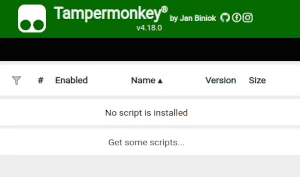
To use user scripts you need to first install a user script manager. Which user script manager you can use depends on which browser you use.
Desktop Mobile (Android) Mobile (iOS)
- Chrome: Tampermonkey
- Firefox: Greasemonkey, Tampermonkey, or Violentmonkey
- Safari: Tampermonkey or Userscripts
- Microsoft Edge: Tampermonkey
- Opera: Tampermonkey or Violentmonkey
- Maxthon: Violentmonkey
- AdGuard: (no additional software required)
- Firefox: Greasemonkey, Tampermonkey, or Violentmonkey
- Microsoft Edge: Tampermonkey
- Maxthon: Violentmonkey
- Dolphin: Tampermonkey
- UC: Tampermonkey
- XBrowser
- Safari: Tampermonkey or Userscripts
- Gear: (no additional software required)
Step 2: install a user script
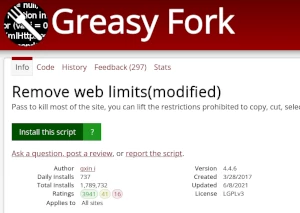
Browse this site to find a user script you want to try. Here is a sample of the most popular scripts:
- Easy Offline - Find out all magnet links and torrents and video links in current page, and stream them from cloud storage automatically.
- Pixiv Illustration Popularity Sorter and Filter - Sort Illustration by likes and display only those above the threshold on followed artist illustrations, artist illustrations, and tag illustrations pages.
- Scribd Downloader Button (Open Download Link) - Adds a button to the Scribd page to open a modified download link for easier access.
- x-RedDragon Client - R=InstaNormal | T=ReverseInsta | Y=BoostInsta | G=BoostSpike | B=4Traps/Boost | Z=4Spikes | ,=AntiTrap | M=AutoMills | F=Trap/BoostPad | V=Spike | N=Mill | H=Teleport/Turret | AutoBiomeHat | Esc=MenuGoldbot/Music | ClickRight=FastBreak | AutoHeal | AutoGG | AntiInstas | Visual Mods.
- Kahoot Manual Answer Reveal - Fetches correct answers and displays them in a pop-up.
Once you've found a user script, click the green install button on the user script's page, and your user script manager will ask you to confirm the install.
Step 3: use the user script
Go to the site the user script affects. It should automatically do its thing. After trying out the user script for a while, go back to where you installed the user script and leave some feedback for the user script's author.